
How Hypnotherapy Helps With Anxiety

Anxiety can show up in many forms: lying awake at 11pm with your mind racing, cancelling plans because the thought of leaving the house feels like too much, or just a general feeling of unease. Anxiety is exhausting because it convinces you it's here to stay. Hypnotherapy for anxiety can gently change those patterns over time, and in this blog I'll explain how.
I'm Sally, a Solution Focused Clinical Hypnotherapist based in Sheffield, and anxiety is the reason most of my clients first reach out. So I wanted to write something that actually explains what's happening in an anxious brain, how hypnotherapy works, and what the research actually says.
What does anxiety actually do to your body?
Anxiety is your nervous system doing exactly what it evolved to do: scanning for threat and preparing you to deal with it. The trouble is that in modern life, the "threat" is rarely a genuine emergency. It's an inbox, a health worry, a difficult conversation you're dreading, or nothing you can even name. Your body still responds as though it's real with a racing heart, shallow breathing, tense shoulders, or a mind that won't switch off.
Over time, this can settle into a loop: you feel anxious, you start overthinking why, the overthinking creates more anxious feelings, and round it goes. Most people describe this as feeling "stuck in their head" or "on edge" even when nothing is obviously wrong. That loop is what Solution Focused Hypnotherapy is particularly good at interrupting.
What hypnotherapy for anxiety actually involves
When you hear the word "hypnotherapy" most people picture stage hypnosis; swinging watches, clucking like a chicken, that kind of thing. Solution Focused Clinical Hypnotherapy is very different.
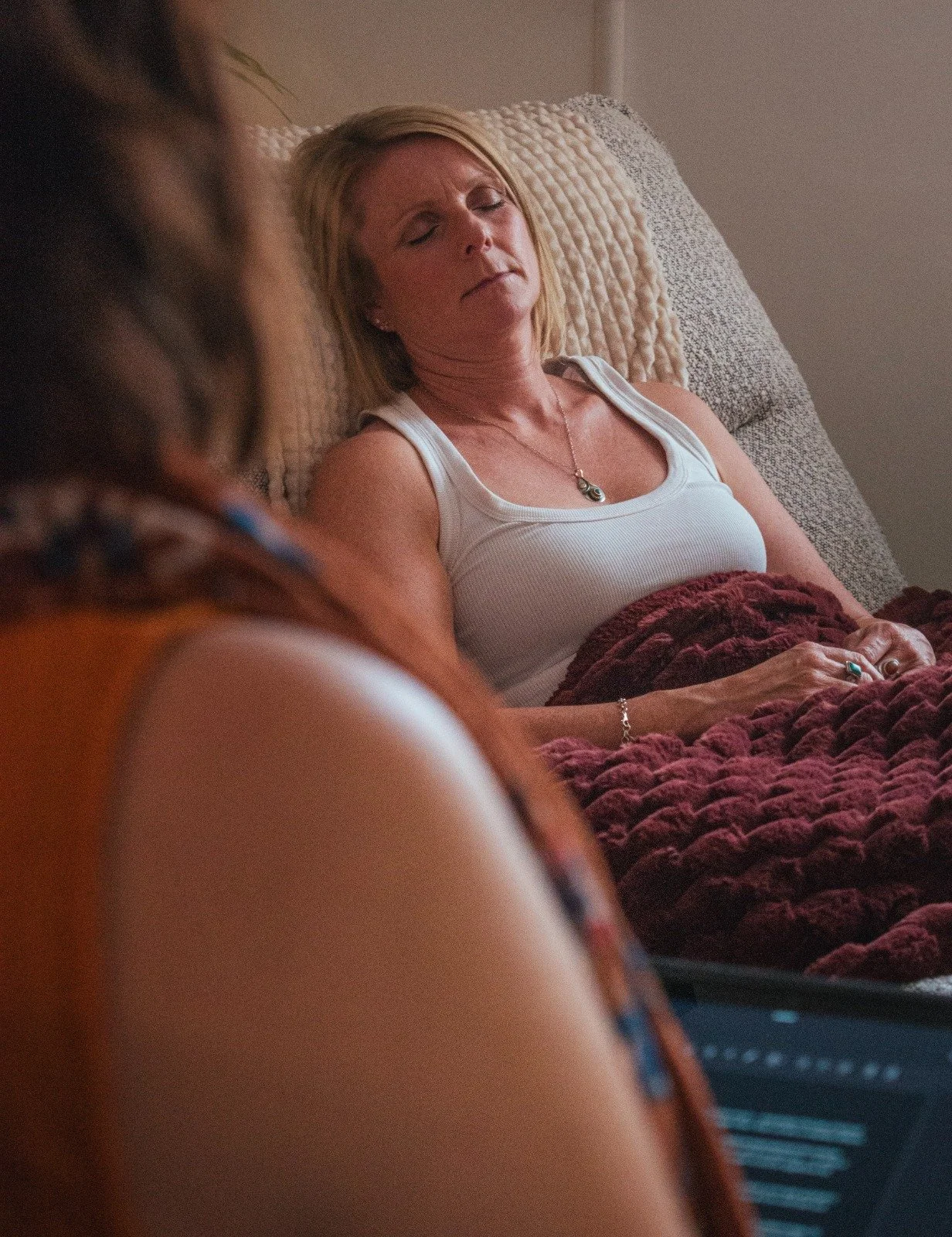
It combines structured talking therapy with a guided relaxation technique called trance. During a session, we spend time talking about what's going well, and what you'd like more of (feeling calm, settled, motivated to go out for a walk, or whatever that might be for you). Then we discuss small, realistic steps forward. This is the "solution focused" part, drawn from the same principles used in brief therapy approaches.
Then you're guided into a deeply relaxed state, similar to the feeling just before you drift off to sleep. You're aware of everything, in control the whole time, and can bring yourself out of it whenever you choose.
While your body is in that relaxed state, your brain becomes more receptive to positive suggestion and less caught up in the analytical, worry-driven thinking that keeps anxiety going. So we calm the body, quiet the overthinking, and give the mind a chance to practise a different way of responding.
How hypnotherapy helps with anxiety, step by step
1. It switches off the stress response.
Trance activates the parasympathetic nervous system; the "rest and digest" state that's the physiological opposite of fight-or-flight. Heart rate slows, muscles release tension, and breathing deepens. Clients often describe their first experience of trance as the first time they've properly relaxed in months.
2. It interrupts rumination and overthinking.
Anxious minds tend to replay the past or catastrophise about the future. Hypnotherapy works with the subconscious mind, where a lot of these automatic thought patterns actually live, helping to loosen their grip rather than trying to argue with them consciously (which rarely works when you're already anxious).
3. It rebuilds confidence in your own coping ability.
A lot of anxiety is really anxiety about anxiety; the fear of feeling anxious again. Sessions focus on your existing strengths and resources, and on rehearsing calmer responses mentally, so your brain starts to build evidence that you can cope, rather than evidence that confirms the fear.
4. It's gentle on the nervous system.
Unlike approaches that ask you to repeatedly confront what frightens you, solution focused hypnotherapy works at a pace your body can tolerate, which is often why people who've found other approaches overwhelming get on well with it.
What the research says about hypnotherapy
It's fair to be sceptical and ask whether there's actual evidence behind it, so here's what the research shows:
A 2019 meta-analysis published in the International Journal of Clinical and Experimental Hypnosis pooled data from 15 studies and 17 clinical trials comparing hypnosis with control treatments for anxiety (Valentine & Milling, 2019). It found a substantial effect: on average, people who received hypnosis showed greater anxiety reduction than around 79% of participants in comparison groups by the end of treatment — and that effect actually grew stronger at follow-up, suggesting the benefits aren't just temporary.
A separate review in Expert Review of Neurotherapeutics (Hammond, 2010) looked specifically at hypnosis for anxiety- and stress-related disorders and concluded it produces measurable reductions in both the psychological experience of anxiety and the physical stress response that goes with it - things like heart rate and blood pressure - across a range of anxiety-related conditions.
Hypnotherapy has also been studied in more specific, high-anxiety contexts: research into patients undergoing chemotherapy has found meaningful reductions in anxiety both immediately after hypnotherapy sessions and at follow-up, leading researchers to describe it as a valuable option alongside standard medical care, without side effects.
None of this means hypnotherapy is a magic fix. Anxiety is complex, and what helps varies from person to person. But the evidence base is genuinely encouraging, and it matches what I see in the therapy room: people who arrive feeling like anxiety is running their life, and who leave sessions with it playing a much smaller, quieter role.
What can hypnotherapy for anxiety help with?
Anxiety shows up differently for everyone, and in my Sheffield and online practice I see it in lots of forms, including:
General worry and a mind that won't switch off, health anxiety and intrusive "what if" thoughts, social anxiety and fear of judgement, panic attacks and the fear of having another one, sleep problems caused by a racing mind, low confidence that keeps you playing small, and specific phobias that limit what you feel able to do.
If any of that sounds familiar, you can read more on how I approach anxiety specifically.
What to expect from sessions
Most clients notice a shift within a handful of sessions, though this varies depending on how long anxiety has been part of your life and what's driving it. Sessions are relaxed and collaborative, there's no loss of control, and nothing happens without your full agreement. You'll usually leave the first session already feeling calmer, simply from having the space to talk it through and experience trance for the first time.
Between sessions, you'll also get a free recording to listen to at home, which helps reinforce the changes and helps get your sleep patterns back on track too.
Is hypnotherapy for anxiety right for you?
If you've tried to "think your way out" of anxiety and found it only makes the thinking louder, hypnotherapy can feel like a relief. It works with the part of the mind that's actually driving the anxious response, rather than only the surface thoughts. It's a gentle, evidence-informed option whether anxiety is a recent visitor or something you've carried for years.
The best way to find out if it's right for you is a conversation. I offer a free 15-minute discovery call so you can ask questions, tell me what's going on, and decide together whether hypnotherapy feels like the right next step.
Frequently asked questions
Does hypnotherapy for anxiety actually work?
Research supports its effectiveness: a 2019 meta-analysis of 17 clinical trials found hypnosis produced significantly greater anxiety reduction than control treatments, with benefits that held up, and even strengthened, at follow-up.
Will I lose control during hypnotherapy?
No. Trance is a natural, relaxed state similar to daydreaming or the moments before sleep. You remain aware throughout and can bring yourself out of it at any time.
How many sessions does hypnotherapy for anxiety usually take?
It varies by person, but solution focused hypnotherapy is designed to be brief and results-focused, with many clients noticing meaningful change within a handful of sessions rather than months of weekly appointments.
Can hypnotherapy help with panic attacks and overthinking, not just general anxiety?
Yes. The same relaxation and subconscious reframing techniques used for general anxiety are commonly applied to panic attacks, health anxiety, social anxiety, and persistent overthinking or rumination.
Is hypnotherapy safe alongside other treatment, like medication or CBT?
Generally yes. Hypnotherapy is a non-invasive, drug-free approach that many clients use alongside other support. If you're currently receiving treatment elsewhere, it's worth mentioning this during your discovery call so sessions can be tailored appropriately.
Take the next step
Let’s help your mind and body rediscover calm. Book your initial consultation:
Book
All Hypnotherapy Services
Take a look at how Hypnotherapy can help with other areas of life too:
All hypnotherapy services

Sally Nicholls is a Clinical Hypnotherapist (SFHD, LPHP, MNRPC) specialising in Solution Focused Hypnotherapy for anxiety, sleep, and confidence, based in Sheffield and working online across the UK. Book a free discovery call to talk through what's going on and how hypnotherapy could help.
Sources referenced
Valentine, K. E., & Milling, L. S. (2019). The Efficacy of Hypnosis as a Treatment for Anxiety: A Meta-Analysis. International Journal of Clinical and Experimental Hypnosis, 67(3), 336–363.
Hammond, D. C. (2010). Hypnosis in the treatment of anxiety- and stress-related disorders. Expert Review of Neurotherapeutics, 10(2), 263–273.
Research on hypnotherapy for anxiety in cancer patients undergoing chemotherapy (meta-analysis of psychosocial oncology outcomes).
