
What Actually Happens in a Hypnotherapy Session?
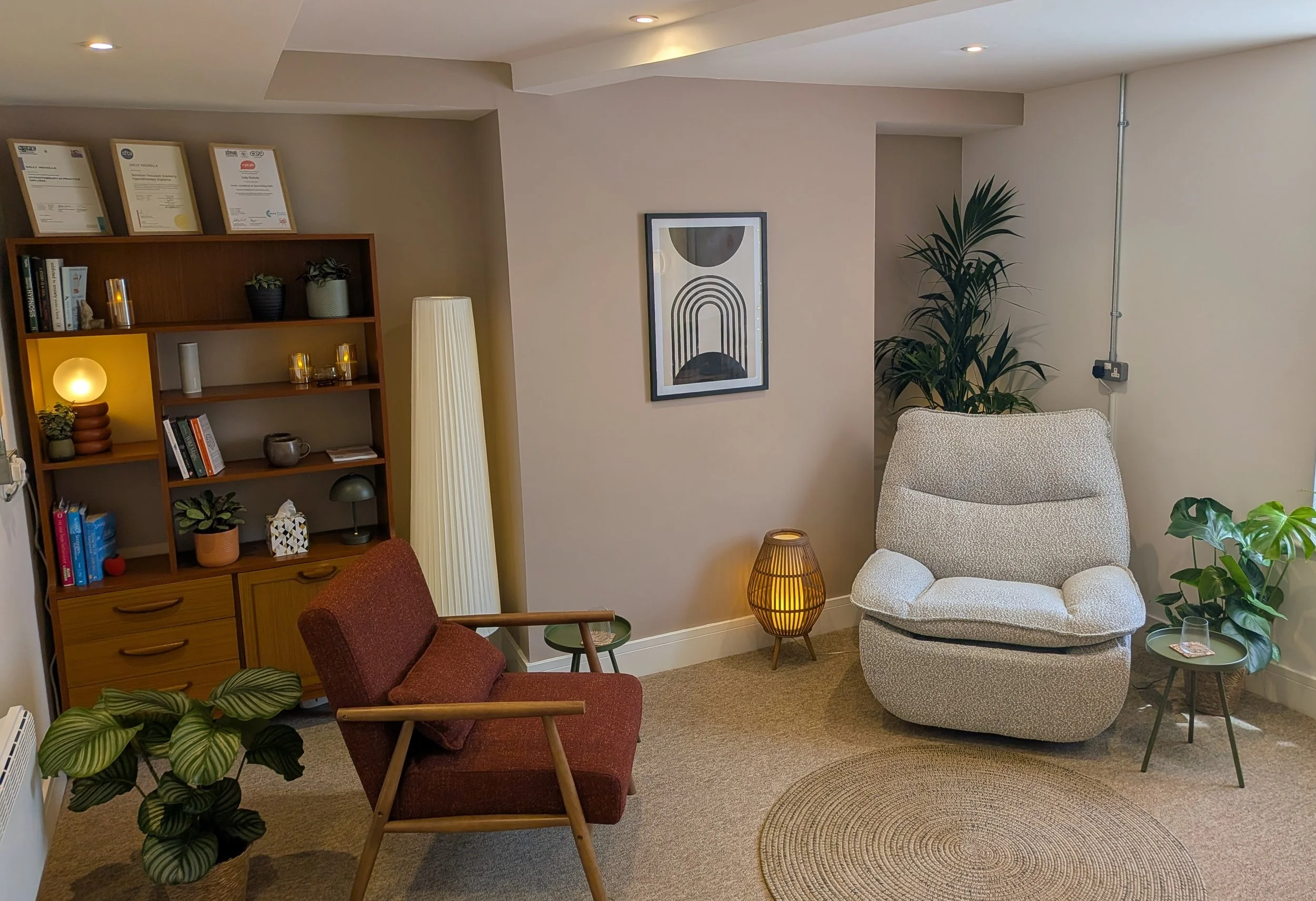
Mend Hypnotherapy Room
Quick answer: What actually happens in a hypnotherapy session might surprise you. It’s a blend of goal-oriented talking therapy (psychotherapy) and deeply relaxing hypnosis.
We spend the first part of the session discussing what's going on for you and what positive changes you'd like to see in your life. Then you move into a guided hypnotic relaxation where you stay fully aware and in control throughout. We don't have to discuss past traumas, and the hypnosis itself is a gentle, calming process. It works just as well over a video call as it does in person.
If that's not what you expected, you're not alone. Most of what people believe about hypnotherapy comes from stage shows and films. And almost none of it matches what actually happens in the therapy room. So let's go through it.
Before your first session
A week or so before we meet, you'll get a short pre-session form to fill in. It asks about what's brought you to hypnotherapy and what you'd like life to look like if things started to change for the better. It also captures all your basic information so that we can save time on the admin side of things before your session.
What is Solution Focused Hypnotherapy?
Solution Focused Hypnotherapy combines two things: solution focused brief therapy, a talking approach that concentrates on where you want to get to rather than dwelling on the past, and hypnosis, used to help the brain absorb that positive direction more easily.
Instead of analysing what's gone wrong, we build a clear, conscious picture of what "better" looks like for you, then I use guided relaxation to help that picture take hold. It's a future-focused, evidence-informed approach.
The first session: your consultation
The first session is a focused conversation. There's plenty of time to talk properly about what you want to achieve through hypnotherapy.
We'll talk through:
What's been happening, and how it's been affecting you day to day. What you want instead, not just "less anxious," but what that actually looks like in practical terms Your strengths and the things that are already working, even in small ways
This is the "solution focused" part of Solution Focused Hypnotherapy. Rather than spending weeks going back over difficult events from your past, we work forward, building a clear, detailed picture of the life you want, because the brain responds well to specific, positive direction and visualisation. I'll also share some neuroscience with you that explains why our minds create unhelpful thought patterns, and how hypnotherapy can gently rewire these over time.
You'll leave with a full understanding of the therapy process, what to expect, and ready to start your journey. If you decide after the consultation that hypnotherapy isn't right for you, that's ok too - that's what the process is for.
So what does the hypnosis part actually feel like?
This is something I get asked a lot. Here's what's actually true:
You stay in control the whole time. Hypnosis isn't something done to you, it's a state you allow yourself to enter, and you can bring yourself out of it whenever you choose. You won't say or do anything you wouldn't normally be comfortable with.
It's not sleep, and it's not unconsciousness. It's closer to the focused, absorbed feeling you get when you're completely lost in a good book, or the soft, drifting attention you have on a long walk. Some people feel very alert throughout. Others feel sleepy, and a few even doze off, and that's fine too. Your subconscious mind is still taking in what's being said either way.
Many of my clients say it feels like a massage for the mind.
If you’ve ever listened to a guided relaxation, it is just like that. All you need to do is sit back, relax and listen to my voice.
How long do the sessions last?
The consultation lasts around 50 minutes. Regular follow-up sessions are also 50 minutes, and we build on work already done rather than starting from scratch each time. (Stop Smoking sessions are a bit different, that's a single, longer 2-hour session, since the aim is to address everything in one sitting.)
Do I need to believe in hypnosis for it to work?
You don't have to believe it to work. And you can’t do it wrong.
It’s helpful to stay open-minded and just follow my instructions. It's a collaborative process, closer to yoga or meditation than anything mysterious.
Does hypnotherapy work the same way online?
Yes. Online hypnotherapy sessions follow exactly the same structure as in-person ones. You'll want somewhere quiet and comfortable, ideally with headphones, so you can focus without distraction, but beyond that, the process doesn't change. Many clients actually find it easier to relax in their own space, which is part of why online hypnotherapy has become so widely used.
How many hypnotherapy sessions will I need?
This depends on what you're working on. Some goals, like stopping smoking, are often addressed in a single, longer session, because the target is specific and immediate. For anxiety, stress, low mood, or longer-standing patterns, most clients notice meaningful changes in confidence, sleep, and overall resilience over roughly 8 to 12 sessions, though this varies from person to person.
The aim throughout is lasting change, not a quick fix that fades. Solution focused work builds new patterns gradually, session by session, rather than trying to "undo" anything in one go.
What changes can I expect between sessions?
Between appointments, most people notice small shifts before they notice big ones; sleeping slightly better, reacting a little less sharply to a stressful moment, catching an anxious thought before it spirals. These small changes tend to build on each other. Each session reinforces the direction you're heading in, and over time that adds up to a genuinely different day-to-day experience, rather than one dramatic turning point. Real change tends to show up gradually rather than all at once; a few small shifts first, then a broader sense of things feeling more manageable. Some of the changes clients most often describe:
"My sleep pattern has improved, my confidence has grown, and I feel less anxious and more in control of my emotions overall."
"Sessions have helped enormously with taking practical steps towards my goals, and exploring new perspectives with real support."
"It's made a huge difference in how I manage overthinking. I feel calmer and more in control."
Read more about what clients are saying: Client Testimonials
Common questions about hypnotherapy
What is a hypnotherapy session actually like?
More conversational than most people expect. You spend the first half of the session talking with your therapist, and the hypnosis itself feels like a deep, focused relaxation. It's not sleep or unconscious, and there is no loss of control.
What should I expect during hypnosis?
A guided relaxation, usually with your eyes closed, while I talk you through calming imagery and suggestions linked to what we've discussed. Most people feel a drifting sense of calm, similar to the moment just before falling asleep. You'll hear everything that's said, stay aware of your surroundings, and be able to move, speak, or open your eyes at any point if you need to. It typically lasts 20–30 minutes, and you come out of it gradually, feeling awake and refreshed.
Read more on what to expect.
How much is a hypnotherapy session?
£80 for a 50-minute session, with discounts on milestone sessions and packages available for a full course of sessions. The cost varies across the industry depending on the practitioner's experience, session length, and location, so it's worth checking exactly what's included before booking.
How long is a hypnotherapy session?
Your first session runs for around 75 minutes, to allow time to talk through your goals before moving into hypnosis. Follow-up sessions are 50 minutes. Stop Smoking sessions are a single 2-hour appointment.
How do I prepare for a hypnotherapy session?
Not much preparation is needed. You'll get a short form beforehand to help me understand what you'd like to work on, and often a relaxation recording to listen to for a few nights in the lead-up. On the day, come as you are, there's nothing to rehearse or get "right."
Will I be made to do anything embarrassing?
No. That's stage hypnosis, and it works on a different principle including willing volunteers, performance, and audience expectation. Clinical Solution Focused Hypnotherapy is a private, one-to-one process focused entirely on what you want to change.
What if I can't be hypnotised?
Almost everyone can enter a relaxed, focused state. It's a natural state we all move in and out of daily, whether we call it hypnosis or not. If you can daydream and you have an open mind, you can experience hypnosis.
Will I reveal secrets I don't want to share?
No. You remain aware and in control throughout, and you won't say anything you wouldn't be comfortable saying in an ordinary conversation.
Is it based on real evidence?
Solution Focused Hypnotherapy combines two evidence-informed elements: solution focused talking therapy, which has a solid research base, and hypnosis, which is increasingly understood through neuroscience as a state that helps the brain absorb new, more helpful patterns of thinking.
Discover my training and qualifications on my about page.
Take the next step
If you're ready to find out more or if you're weighing up whether hypnotherapy is right for you, the best next step is usually just a conversation. You can book a free 15 minute discovery call at a time that suits you here:
Book a session or discovery call.
You can also read more about how Solution Focused Hypnotherapy can help with different challenges on the pages of this site:
Hypnotherapy for public speaking & confidence
Hypnotherapy for sports performance
Or if smoking or vaping is what's brought you here, take a look at the Stop Smoking page for more on how that specific process works.

Written by Sally Nicholls
Solution Focused Clinical Hypnotherapist (MNCH Reg, HPD), based in Sheffield and working online across the UK. Sally draws on a background in the corporate sector to bring a grounded, practical approach to anxiety, stress, sleep, and habit change.
